
Nudges 1 · 2
Memory
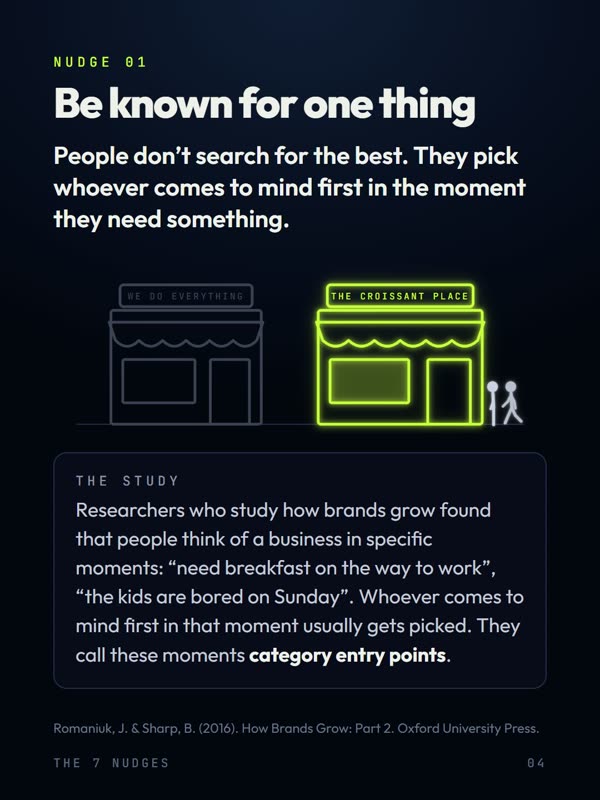
Whoever comes to mind first gets the call.
People rarely compare everyone. They pick from the two or three names that pop into their head in the moment.
Two shops on the same street. Two creators with the same AI tool. Same start, different result. We break down what the winner did, and the research that explains it.
A customer doesn't compare everyone. They think of two or three names, glance at a price, a sign or a profile, and decide in seconds. The product matters, but it's rarely what tips it.
What tips it are small things: who came to mind first, who felt easiest, who felt safest, whose price felt fair. Psychologists have been measuring these for fifty years. We turn them into stories you can use.
Each reel and each chapter of the guide is about one of them.
Whoever comes to mind first gets the call.
People rarely compare everyone. They pick from the two or three names that pop into their head in the moment.
The easiest yes beats the best option.
Too many choices, a confusing menu or an unclear first step, and people put the decision off, often forever.
People avoid regret more than they chase deals.
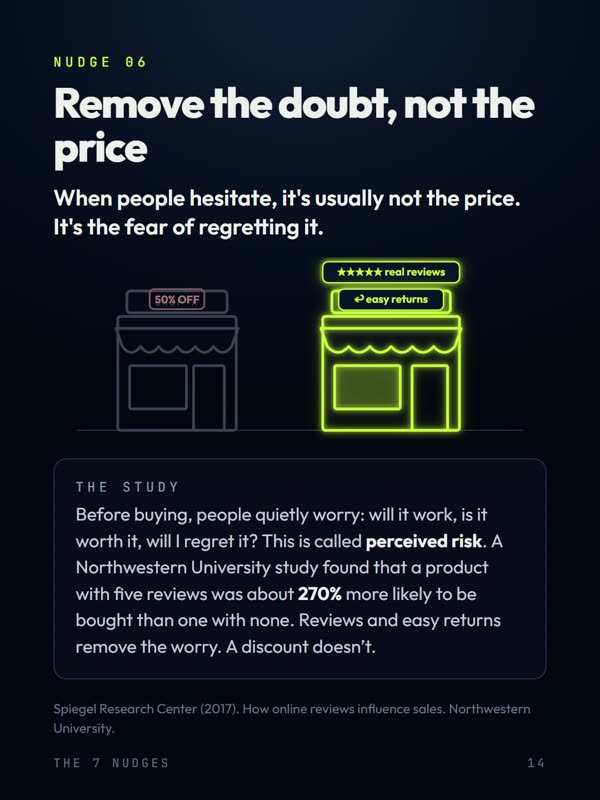
Before they buy, people quietly ask: will it work, is it worth it, will I look silly? Answer that and you win.
Price is judged, never seen alone.
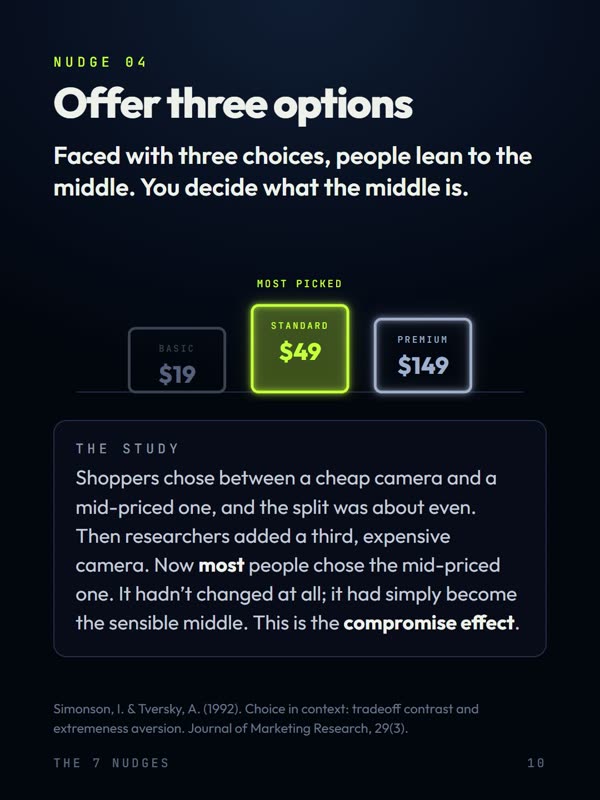
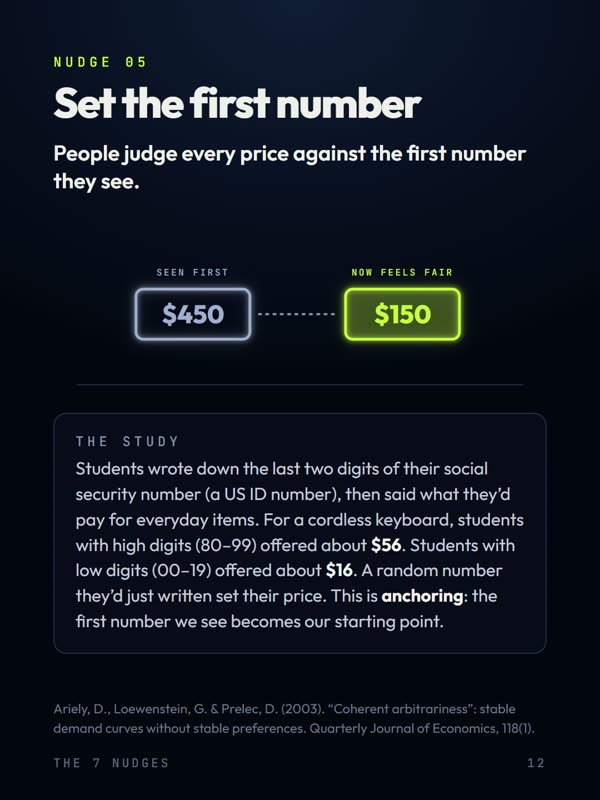
Every price is compared to something: the first number they saw, the option next to it, the cost of doing nothing.
Short reels, one real choice each. Here's what they look like.
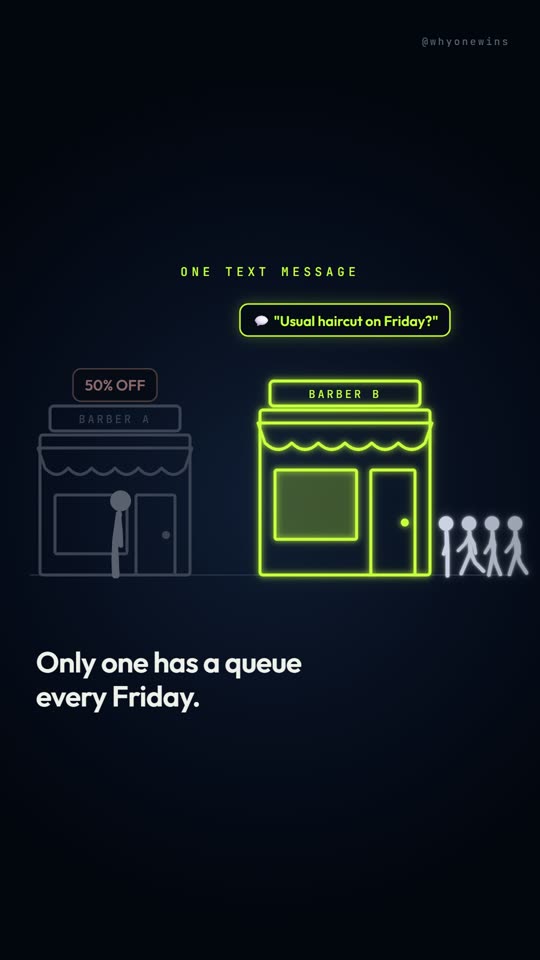
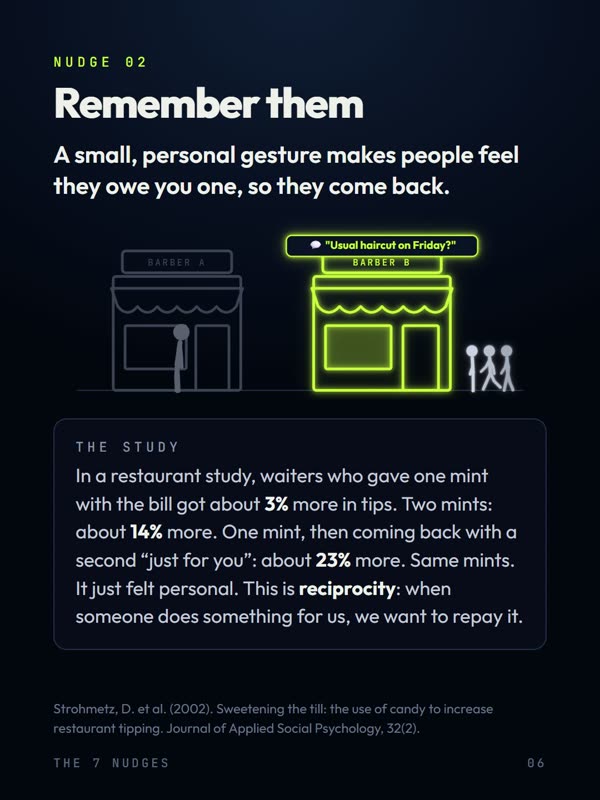
Same street, same price. One cut prices in half. The other texted regulars "your usual Friday cut?" Guess who has the queue.
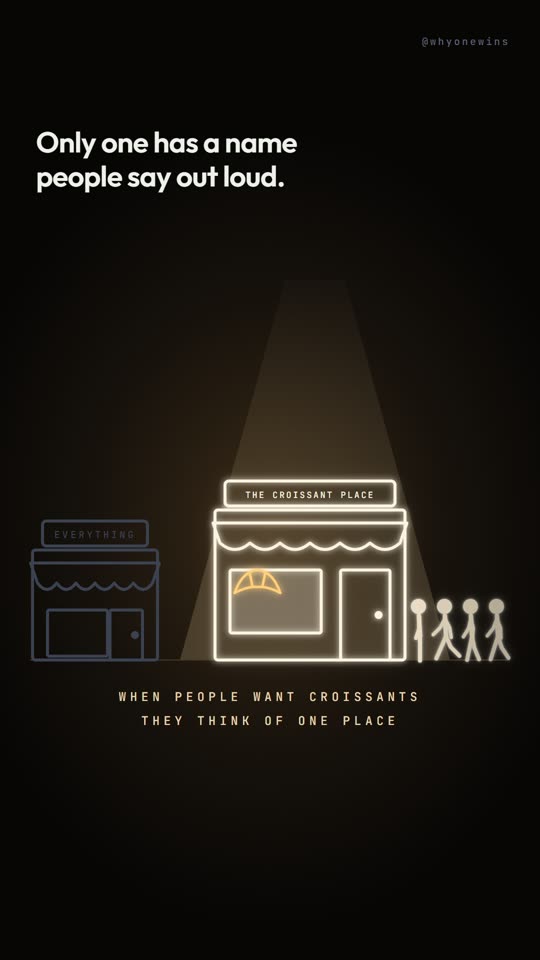
One bakes everything. The other is "the croissant place". When people want croissants, only one name comes to mind.
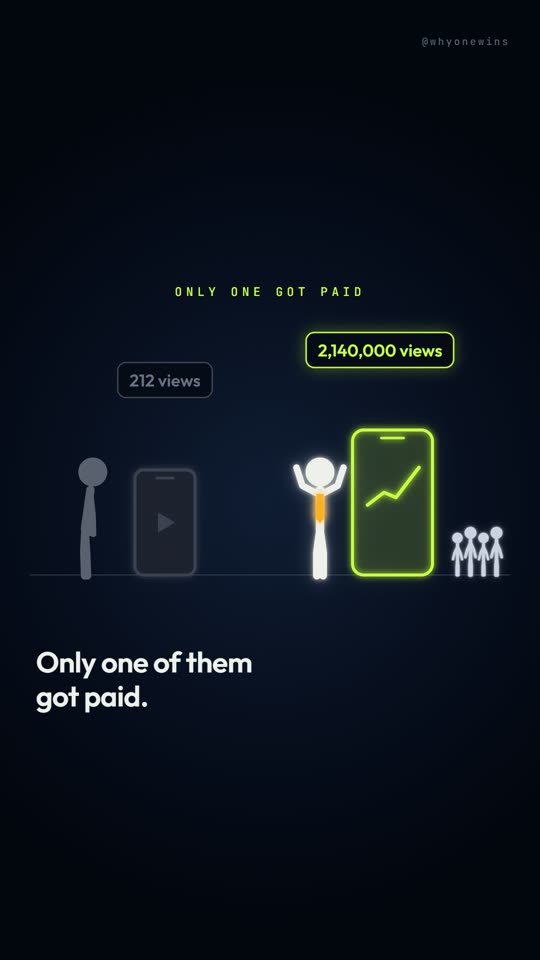
Both started a faceless page the same month. One posted for everyone. The other posted for one person. One got paid.
Seven small moves, each backed by a real study, with an example for a local business and for a creator. Plus a one-page cheat sheet to keep.
Shops, salons, gyms, cafés, trades. You compete with someone on the same street, often for the same customer.
YouTube, Instagram, AI-powered channels. Thousands make the same content; a few get chosen and paid.
You're pitching, quoting and pricing. Small changes in how you present it decide who gets the yes.
We cite their published work. We're not affiliated with or endorsed by these researchers.
Yes. Leave your email and the PDF downloads straight away. No card, no trial, nothing to cancel.
Seven short chapters. Each one explains a single psychology principle in plain words, the real study behind it, three things to do this week, and an example for creators. 19 pages, about 15 minutes to read.
Anyone who needs people to pick them: local shops, service businesses, freelancers, and creators running pages or faceless channels. The ideas are the same; the examples change.
Every chapter cites a published study or book: authors, year and journal are printed under it, so you can look them up. We're not affiliated with these researchers; we explain their work.
No. You'll get new guides first and the occasional short lesson. Every email has an unsubscribe link, and we never sell or share your address.
A small, independent studio that makes the @whyonewins reels. Every week we take one real choice (two shops, two creators) and show the psychology that decided it.
Start with the free guide. Pick one nudge, use it this week, watch what changes.
Get The 7 Nudges, free
